 Alessandro Marini
KEYNOTE LECTURE
From Deterministic Rail Automation to Learning Mobility Systems
Alessandro Marini
Brescia Mobilità, Italy
ABSTRACT
The experience of Brescia Mobilità provides a concrete perspective on the evolution of mobility automation from deterministic rail systems towards more adaptive and learning-oriented transport infrastructures. Since the inauguration of its fully automated driverless metro line in 2013, Brescia has operated one of the earliest medium-size urban rail network relying on advanced automatics train capabilities based on communication technologies. These systems enabled safe and reliable operations through precise measurement and control of vehicle position, speed and separation within fully segregated operating environments.
Today, the city is taking a further step by developing a new generation tram system designed to progressively introduce autonomous operational capabilities in open urban environments. Unlike metro systems, tramways interact continuously with mixed traffic, pedestrians and dynamically changing urban conditions. Addressing this complexity requires moving beyond purely deterministic control architectures towards perception-driven and context-aware operational strategies. Emerging solutions based on multi-sensor perception, onboard high-performance computing and synthetic simulation environments are enabling vehicles to interpret real-time operational contexts and progressively enhance their decision-making capabilities while remaining embedded within certified safety frameworks.
This transition reflects a broader expansion of the measurable domain of mobility systems. While traditional automation focuses on controlling trajectories, future approaches aim to understand and influence mobility behaviour at system level. Distributed sensing fleets, digital twins and data-driven orchestration platforms may enable cities to evolve towards “learning mobility systems”, capable of optimising multimodal transport flows and supporting more sustainable and user-centred urban mobility ecosystems.
SPEAKER BIOGRAPHY
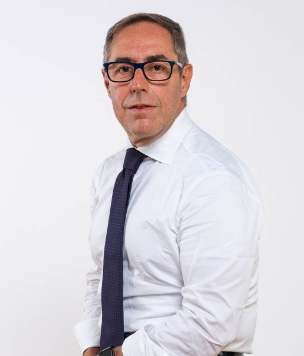
Alessandro Marini is President of Brescia Mobilità, the municipal company responsible for public transport, automated metro operations and integrated urban mobility services in the city of Brescia, Italy. With more than 35 years of experience, he has developed his professional career at the intersection of advanced manufacturing, digital innovation and management control, working both as an industrial executive and as a consultant.
He is Managing Partner at Quantra, supporting companies in the digital transformation of production and logistics systems, with a focus on cyber-physical infrastructures and data-driven operations. Alessandro holds a PhD in Information Engineering from the University of Brescia, where he also teaches topics related to industrial operations and information systems. His current interests include the evolution of urban mobility towards automation, real-time orchestration and learning mobility ecosystems, bridging engineering principles from manufacturing with emerging challenges in transport and smart cities.